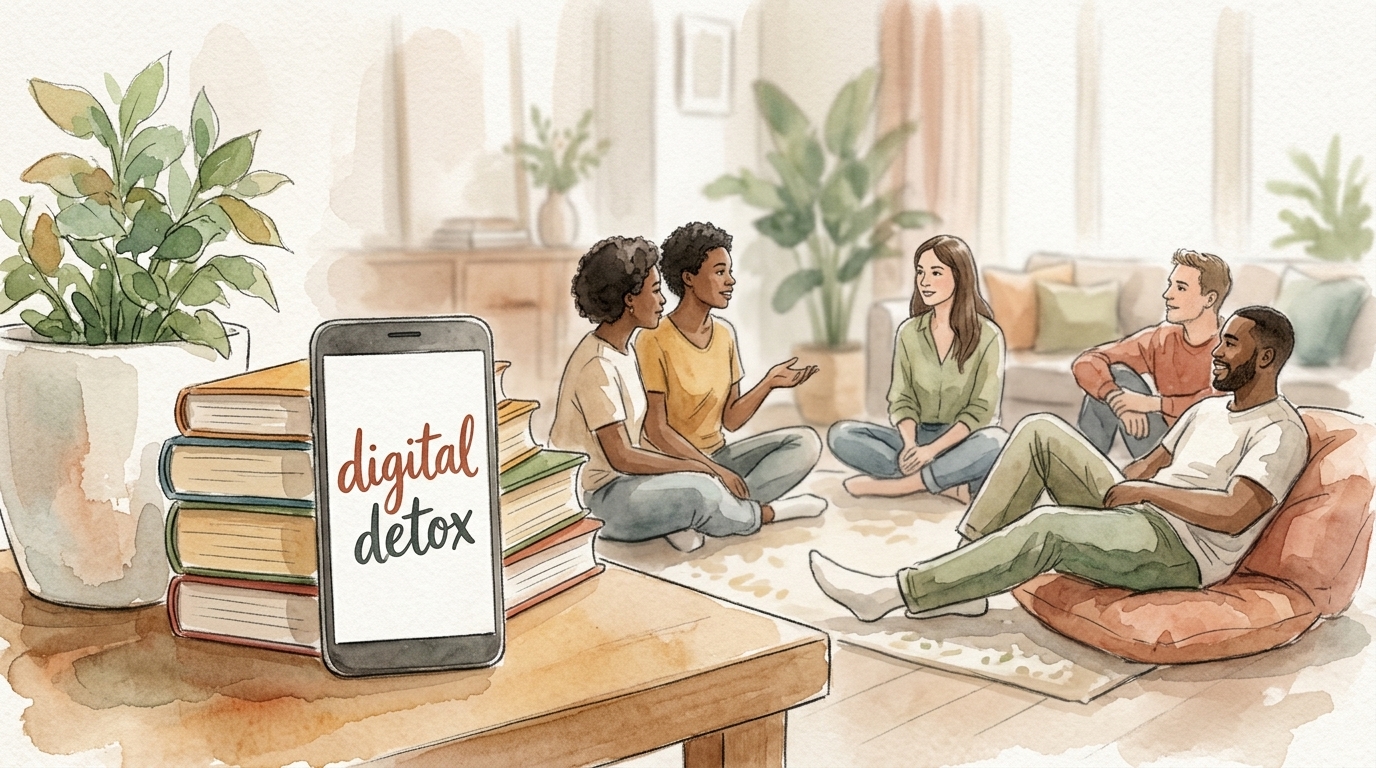
We live in a world where almost everything is right at our fingertips. Trending news is one click away. Doomscrolling is done for hours on social media. Work correspondence is mostly done digitally, and staying in touch with friends and loved ones is as easy as sending a quick message on an app.
Some people find it hard to function without reaching for their phones or laptops. From the moment they wake up to the moment they fall asleep, there’s a constant need tostay connected. This also leads to the Fear Of Missing Out, FOMO, which is the nagging feeling of being left behind if they aren’t in touch with the digital world.
Stepping away for some time for our mental health and wellbeing is necessary, andthat’s where digital detox comes in. With our minds being stimulated all the time, it canlead to problems ranging from sleep issues to anxiety, and even social isolation and loneliness. Stepping away from screens, even briefly, grounds you in the present and improves social connection.
What is A Digital Detox, and Why Is There A Need For It?
A digital detox is an intentional disconnection and unplugging from technology and social media for a period of time. These technological devices include smartphones, tablets, computers, smartwatches, and televisions, basically screens in general.
A digital detox gives back control of attention, time, and energy. We are now in an age of information overload, shortened attention span, and mental health challenges on the rise, so reconnecting with ourselves and society is necessary.
Digital detox benefits in more areas than social reconnection. Being able to step awayfrom screens helps in the following ways:
- Increases productivity and creativity
- Improves focus
- Gears you toward self-development
- Improves sleep quality
- Improves mental health and wellbeing
- Reduces stress
How Digital Dependency Affects Social Wellness And Reconnection
Have you ever walked into a room and noticed that everyone is staring at their screens and no one is really present? With most people’s eyes and attention glued to screens, the art of socializing is forgotten. Here are ways digital dependency can affect social wellness and reconnection:
- It makes you absent in real-world interactions: Constantly being distracted by your phone or devices while in the presence of others disconnects you from the people right in front of you. It could be scrolling through social media at a family dinner, with your attention divided while you half-listen to conversations. Worse, it can make the other person you’re conversing with feel ignored.
- Reduces physical connection: Relying solely on devices cannot replace human connection. Connecting only via social media has also been shown to reduce empathy and, as a result, can lead to negative behaviors online, such as trolling. Also, the absence of verbal cues in texts can lead to misunderstandings and create a false sense of intimacy. Staying connected to family and friends digitally isn’t a bad thing. It strengthens bonds and keeps us updated on our loved ones’ lives, especially if you’re miles apart. But humans are social beings, and being able to talk, laugh, and hug in real life is therapeutic in itself.
- Can negatively affect relationships: Constantly being on social media can lead to constant comparisons, which can negatively affect the way you view yourselfand others online. It can lead to constantly seeking validation and building aesthetically pleasing friendships built on dropping likes and leaving comments, rather than building the authenticity of real friendship.How To Do A Digital Detox
How To Do a Digital Detox
A digital detox doesn’t necessarily have to be taking a grand vacation somewhere where you have no access to your phones. It means being intentional about your screen or social media use. Taking these steps can help you figure out how to start.
- Be honest about your screen time: The first step to digital detoxing is being honest about how much time you dedicate to your screens. Note the areas in which digital dependency has affected you. It could be feeling less enthusiasm to leave the house or being more distracted than usual during conversations. A lot of devices, specifically phones, have apps that allow you track how much screen time you’ve spent.
- Create a goal: Ask yourself; What intentions do you have for digital detoxing? Do you want to spend your time taking up a new hobby like reading or cooking?Having a specific goal in mind makes detoxing easier to begin.
- Map out a plan: Reduce your screen time in a way that works for you. You don’t have to go all in at once, but build small, consistent steps so you won’t fall back into old patterns. You can start by not touching your phone in the first hour of waking up. This is a good way to start, as it prevents the dopamine rush, reduces anxiety, and, with no distraction, creates space for you to focus on other things like meditating, praying, or making breakfast. You can take 30-minute breaks throughout the day, or have a no-screen day as you build up, if you’re up for it. You can set alarms for this or download apps likeOpal or Forest to help you stay away from your phone.
- Engage your family and friends: Letting close people know you’re on a digital detox can help you be more accountable. If you’re active on social media, posting about your detox could also help others know if you want to take longer breaks.
- Have a no-screen zone: Another way to help with digital detoxing is to set aside zones where you aren’t using your phones or laptops. For example, you can decide to stop bringing your phone to the dinner table or stop using it in bed. You can hang out in your friend’s place and not fish out your phone from your bag, so you can actively listen to conversations.
- Keep professional necessities open if needed: If you’re working remotely or need to stay available for work, limit notifications to only essential work-related ones. If possible, keep your work devices separate from your personal devices. You can also delete social media apps or hide them from view to reduce distractions if you find it hard to disconnect.
- Review your results: After your detox period, note how you felt. Were you able to make plans to socialize more? Did you feel more connected to your family? Has your sleep improved and your mood brightened? Knowing the benefits makes it easier to continue with digital detoxing long-term.
Conclusion
Doing a digital detox means ridding yourself of the overload of technology. It is a conscious choice to reclaim your time, attention, and the quality of your relationships. You have to be intentional and don’t have to worry about being perfect or extreme. Every step you take towards detoxing matters. It could be putting your phone down at dinner, taking a walk without earphones, or simply being present in a conversation. Your focus shouldn’t be on disconnecting from the world entirely, but on reconnecting with theparts of it that matter most, which are yourself, life’s moments, and the people around you.